

Our precious coastlines of Aotearoa New Zealand are now facing the imminent threat of deep sea oil drilling. Plans have been set to start deep sea drilling in two drill locations this summer. Looking at the spill model data that Greenpeace New Zealand have recently released, if an accident were to occur at these drill locations, the effects would directly hit some of the most iconic surfing locations in New Zealand including places like Dunedin, Kaikoura, Taranaki, Raglan, Piha and Shipwreck Bay.
As surfers we are so closely connected to the marine environment and it’s easy for us to envisage what a spill might mean, the potential impact on the waves and on the ecosystem. If an accident were to occur, we have absolutely no way of knowing how to deal with the consequences and the government has to date refused to show us Anadarko’s spill contingency plan.
The surfing community should be rightly concerned and not be afraid to say so. Mischa Davis
Greenpeace spill model for NZ at the two proposed locations oilspillmap.org.nz
This is the full ‘Risky Business At Sea’ article published in DGZ issue 05 written by Mischa Davis
Risky Business At Sea
On the 20th of April 2010 an explosion took place on an offshore exploratory oilrig in the Gulf of Mexico. Two days later an oil leak was discovered and over the next 87 days over 600 thousand tonnes of crude oil spilled into the Gulf—polluting the environment, killing wildlife and causing over $40 billion in clean-up costs. The BP Oil Spill has been labeled as the world’s biggest unintentional offshore oil spill.
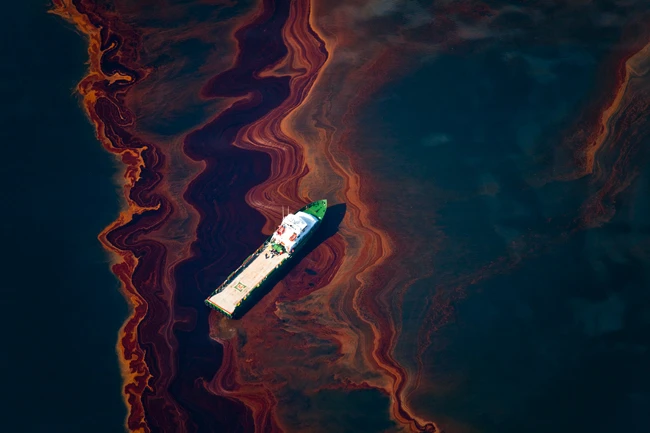
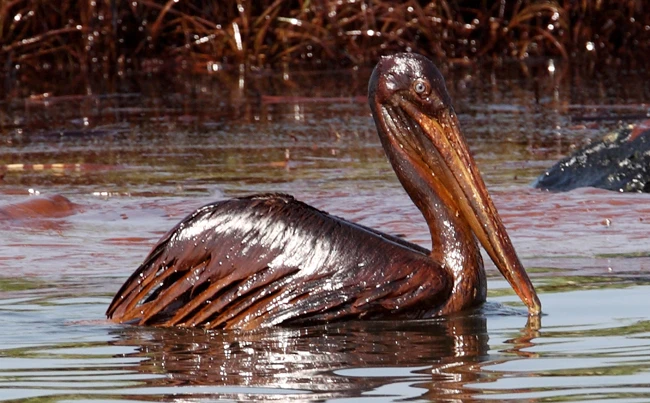
Aerial view of the oil leaked from the spill Photo: Daniel Beltra/Greenpeace | Below a Pelican sits covered in oil from the spill Photo: Greenpeace
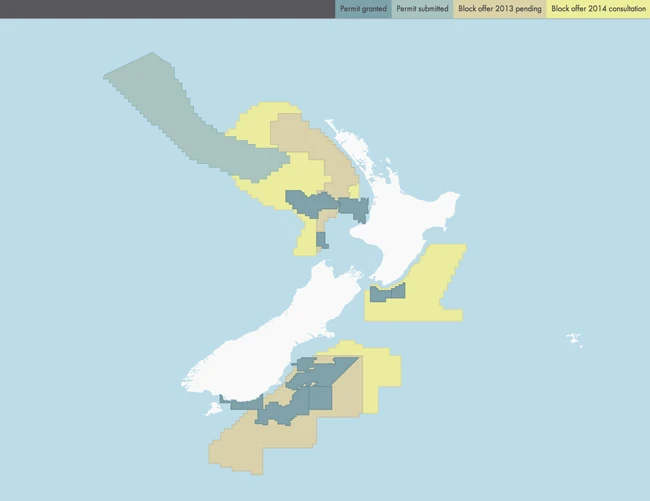
Deep Sea Oil Drilling in NZ
As surfers, with our close affinity with the ocean, it is only natural that we should take on a role as guardians of what we love. We have seen pro surfer Dave Rastovich alongside environmental group, Kiwis Against Seabed Mining (KASM), paddle 350 kilometers up the West Coast in protest against the issue of seabed mining for iron sand. Now our precious coastlines are facing another new threat in the form of deep sea oil drilling.
Deep sea oil drilling is a controversial issue facing New Zealand. We are now witnessing the largest deep-sea oil exploration programme ever undertaken here, with many New Zealand and international corporations spending hundreds of millions of dollars on prospecting and exploration. At present oil exploration permits have been issued at six major offshore sites extending over an area that is larger than the whole of the North Island. The Government is also likely to open up further areas for deep sea oil exploration.
In fact, our Government is so keen on the idea of drilling for oil that they have gone and taken away the human right to protest against it! The ‘Anadarko Amendment’ was enacted this year in response to protests against oil exploration that took place off the East Cape in 2010. Anadarko is an oil company that has been issued exploration permits and the anti-protesting law has been enacted to safe guard Anadarko’s and other oil companies’ interests. Need I note that Anadarko was the silent partner involved in the BP Oil Spill.
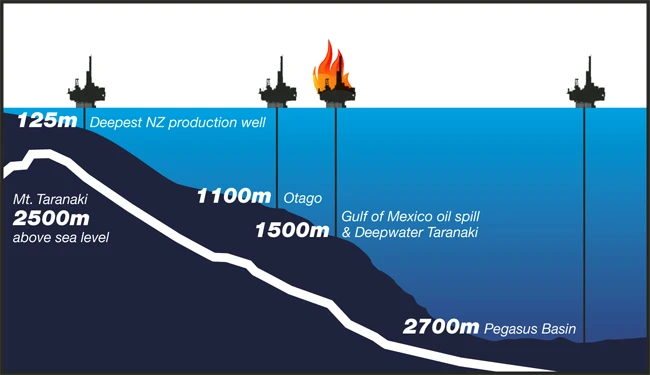
The ‘Depth’ Issue
Offshore oil extraction is not new to New Zealand; it has been taking place here since the late 60s. The major issue this time is not the drilling for offshore oil in itself, but the depth at which it occurs. Currently New Zealand’s deepest producing offshore well is in 125 metres of water. However, in the Government’s proposed permit areas they can go as deep as 2000 metres. The BP spill in the Gulf of Mexico happened on an exploratory well in 1500 metres of water, the depth being the reason it took so long to fix the leak. Common sense tells us that the deeper you drill, the harsher the conditions become and the harder it is to fix a leak. At 2000 metres we are talking about a place that is pitch black, with freezing cold temperatures, and that is unable to be reached by divers. Furthermore New Zealand waters are a lot rougher than in the Gulf of Mexico.
What Could Go Wrong?
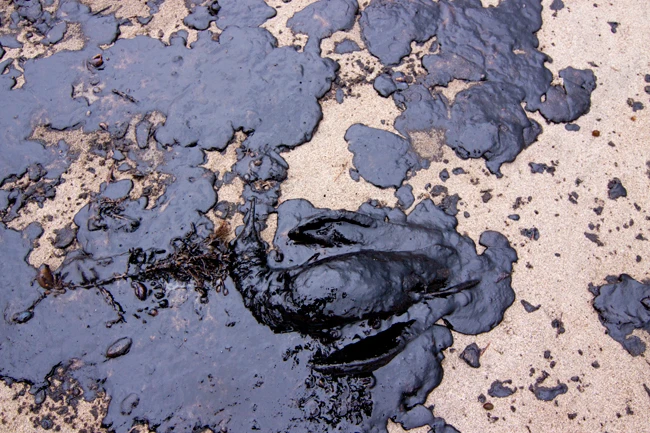
Deep sea oil drilling carries the risk of an environmental catastrophe if an accident on the scale of the BP spill were to occur in New Zealand’s waters. The grounding of the vessel the Rena off the coast of Mount Maunganui, which resulted in a substantial oil spillage, has shown the inadequacy of regulatory provisions covering oil and gas extraction and carriage. The Rena spill clean-up relied enormously on the hard work and dedication of volunteers, not the Government.
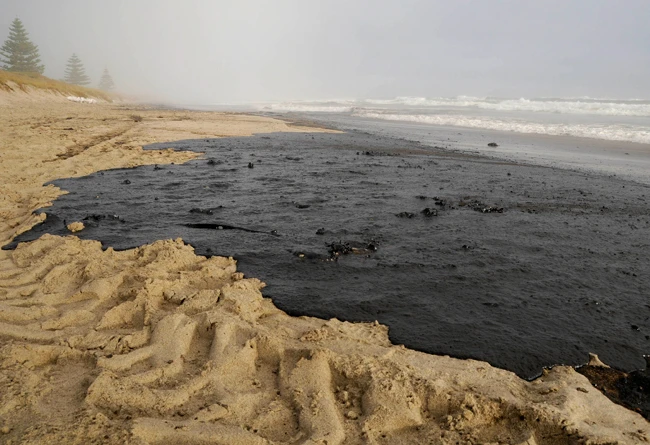
Above, Rena oil spill damage on Papamoa Beach. Photo: Greenpeace | Below, A dead seabird from the Rena oil spill. Photo: Rambo Estrada
Award winning American photojournalist John Wathen recently toured New Zealand with his harrowing eyewitness account of the BP Oil Spill. John’s assessment of the BP spill was that efforts to contain the spill totally failed before it had decimated the coastline. He stated that if deep sea oil drilling were allowed to happen here in New Zealand it would be a “recipe for disaster”.
Maritime New Zealand has admitted that they have zero undersea assets for dealing with a spill. The BP spill was only stopped after a relief rig was brought in to drill an intersecting well that diverted the flow of oil. There is no requirement under New Zealand law to keep a relief rig in New Zealand waters. The nearest assistance in the case of a spill would come from Australia. If the oil rig were on the east coast, which is likely, any Australian assistance would have to take the long way around. In the BP spill 4,000 vessels were used in the assistance of laying booms and tracking the travel of the spill. Maritime New Zealand has a maximum of 400 vessels it could use to assist. If an accident were to occur, once it begins spilling, there simply is no way to contain it.
Not Worth the Risk
There is much uncertainty around the environmental risks of oil extraction and how to off-set those risks. What is certain however is that New Zealand’s ocean environment contains immense value in supporting diverse ecosystems, sustainable fisheries, and holding intrinsic worth. Eighty per cent of all New Zealanders live on or near the coast. The ocean is without doubt a central part of our identity and well-being. As surfers it’s easy for us to understand the nature of the marine environment, what a spill might mean and the potential impact on the waves and on the ecosystem. The damage to our marine environment, coastlines, economy and reputation would be catastrophic. Deep sea oil drilling is simply too risky for New Zealand’s waters. If the United States was not ready for the disaster, New Zealand certainly will not be either. The only way to prevent the devastation caused by a deep water oil spill is to ban all deep water drilling in our waters.