



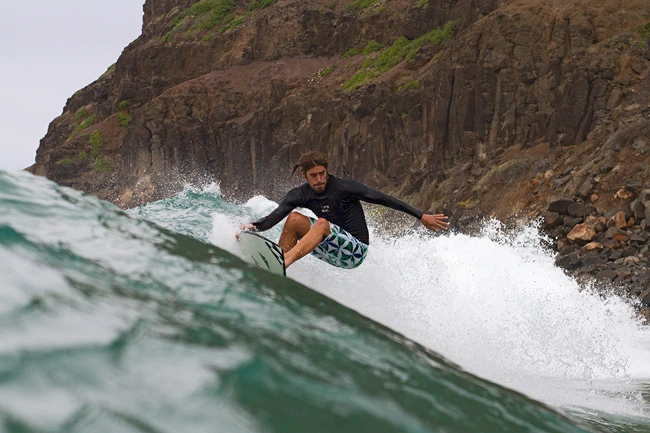
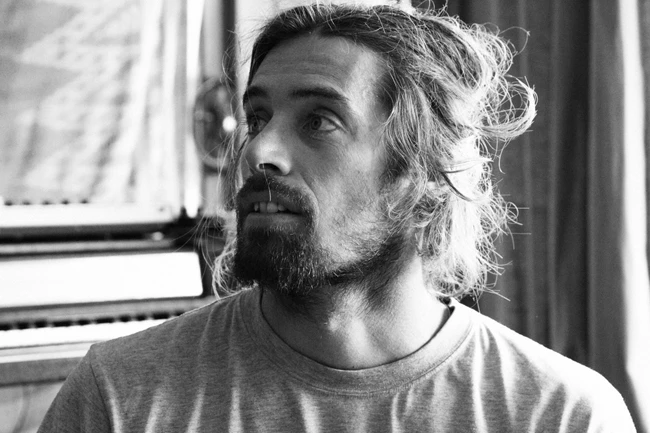
Aside from being a phenomenal surfer on all types of craft David Rastovich also devotes a large portion of his time to combatting the ever growing issue of environmental destruction that man carries out, ocean pollution and the affects it has on it’s inhabitants. We had Mischa Davis ask Dave a few relevant questions for DGZ. Scroll down for his insightful answers along with a video from his recent visit to the La Casa house near his home in Byron Bay. lacasa.net.nz
All Photos | Craig Parry
DGZ: New Zealand’s Maui dolphins are the worlds smallest and rarest dolphin, on the brink of extinction. Your recent 350km awareness paddle left a big impression on New Zealand. In what way did this experience leave an impression on you?
DR: My time on the west coast paddling and meeting locals was an amazing reintroduction to New Zealand culture and what is happening there in this current time. I spent the first six years of my life out in the hills behind Piha and had my first ever beach experience there before moving to Australia. I have always come back to NZ to visit family and cruise but hadn’t done that much surfing there. The paddle up the coast gave me a very clear picture of the west coast of the North Island and it was mostly sad. Out of the 350 km’s of coast I paddled past only about 30km’s of landscape was covered in trees. Behind Raglan and up near Whatipu to Piha were the only sections of coast that was forested. In contrast to the desolation of the landscape I met so many amazing people who live right there on the edge of the water and love their home. The lasting impression I gained from the paddle is that New Zealand is on the edge of joining the rest of the industrialized world, if industries like sand mining and fracking take hold. We will lose the beauty, health, magnetism and idea that Aotearoa is a place of natural beauty. I think eco tourism will cease, the health of New Zealanders will decline in conjunction with other species disappearing…and all so a few very fat cats in Auckland can have extra dollars in their pockets. It seems like all countries are in this position at the moment, yet where New Zealand differs is in it’s smaller population of well informed and educated people. People who love their place of home, who swim in it’s waters, eat from it’s
earth and have long, long lineage’s of family who have done the same. If there is anywhere on the planet that stands a great chance of avoiding the blind destruction of modern industrialisation I feel like it is New Zealand and her strong people. The revolutions that are necessary on Earth right now need to be born from this love of place, people and surrounds. The tasks before us are not easy, decisions can be hard, but if we are motivated by our love then it will carry us through troubled waters. When I paddled through the Manukau channel I was in the roughest water I have ever encountered. I was so sore and tweaked from paddling for hours already that day but it was the love of being in the ocean, and hoping for the Popoto dolphin to survive our impacts that lit me up and got me through those currents and turbulence. Those experiences stay with me when I come to
shore and deal with life on land.
DGZ: What other missions have you been up to since the NZ paddle?
DR: I have actually been out of the water with a back injury for three months. I hit the reef surfing in Hawaii a while ago and have been laid up dealing with that for some time. That has kept me at home, gently working in our garden.
DGZ: Everybody is using iPhones, and seem to be constantly connected these days. Some might argue this makes life easier, however it can also be seen to complicate life. What are your thoughts on the modern technology of today?
DR: I personally steer clear of things that don’t feel that healthy. I use a computer to email and stay in touch with people every few days or so. My lady and I share a phone that we both tend to forget about and not use for extended periods…so I guess we are pretty lame when it comes to social media etc. Certain research has found that the modern person works three times more than our ancestors a few hundred years ago. Though work can be fun I am sure most of us would say we would rather play more and work less. So considering we created technology to help us do jobs more efficiently, with less input, it seems all our technologies have done is enslaved us more and more. We all feel great when we disconnect from all of the gadgets. To me that is a pretty clear message.
DGZ: Social networking today via the internet can be a great way to spread environmental awareness, however being faced with so many issues can also be quite overwhelming and disenchanting. How can we avoid that? How do you manage to stay positive?
DR: Again I feel that as long as love is your primary motivation for your actions you will have no trouble when things get rough and challenging. All we have to do is be clear with ourselves and know that every little action contributes to the world inside and outside of us.
DGZ: What is in your opinion is the most pressing environmental issue?
DR: Well for me ocean issues are at the core of my life because that is where my time is spent and where my heart lies. Our world is diverse, and so for every different aspect of life there seems to be people associated with protecting and preserving the integrity of that aspect.
DGZ: Despite all your environmental efforts you seem to be a rather normal person in terms of your day to day life. How important is it for you that you maintain that? Do you find it difficult to live a balanced life sometimes?
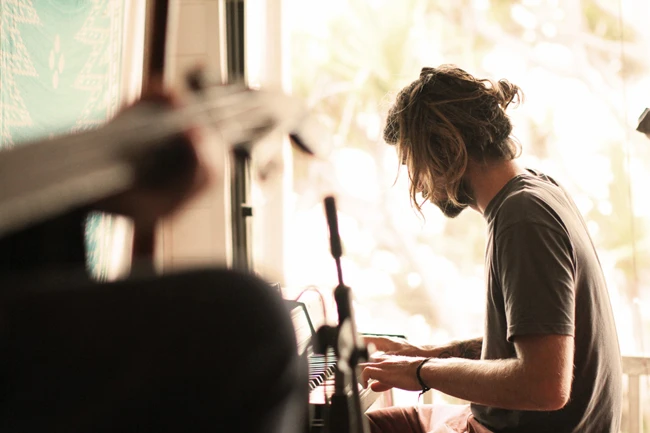
DR: I value space and simplicity. So when I am not on the road or carrying out an ecological campaign I stay very quiet on our property and enjoy the space. Every good piece of music has silent moments and life seems like it should be the same to me.
DGZ: Could you give some simple advice on how we can change our own day to day living to be more mindful of the planet? Something small, that we could do to make a difference?
DR: Your greatest love is your greatest form of activism. It seems to me like the people who lead the most vibrant and stoked lives are the ones who follow their heart. If you are a writer then write something that will lift people up and protect the world that is shared with us. If you are working in a bank and love money then do what you can to fulfill the dreams of other people and fund projects that bring health to the world, or just smile authentically with all the people you meet everyday. If you are an artist, create pieces that inspire the world. If a fool like me can make going surfing into a career that works on ecological issues, then it shows that any skill you have, as long as you love it, can bring out something great in the world and be of value.